
January 22, 2023
Mark Winfield

In late 2022, the Ontario government adopted , the More Homes Built Faster Act. The legislation made to the province’s land use planning system.
The province also passed — which allows the mayors of Toronto and Ottawa to pass with only a third of the support of their councils.
Premier Doug Ford’s government justified the adoption of this sweeping housing legislation, as well as the opening of parts of for development, on the basis of the need to address “the housing supply crisis.”
Specifically, the to a , which said that Ontario needed to build 1.5 million homes over the next decade to address the shortage of housing.
The task force report provided the foundation for shredding of much of the province’s land-use planning and local governance structures, all in favour of development interests. But there has been very little of how the task force arrived at the 1.5 million homes figure.
A report that doesn’t add up
The provincial housing task force report stated that Ontario was 1.2 million houses short of the G7 average and needed to build 1.5 million new homes over the next 10 years. This would imply building 150,000 new dwellings per year.
In order to reach this conclusion, the task force report claimed that Canada has the lowest number of houses per 1,000 people of any G7 nation. However, that the number of dwellings per 1,000 people is not a very useful comparison because people live in households.
In Ontario, because the average household size is , 1,000 people would only require 388 housing units, whereas in , for example, 1,000 people would require 507 dwelling units because of an average household size of only 1.97.
that the task force report was over-aggressive in calling for 150,000 new dwellings per year.
Ontario’s population grew by an average of . Applying the Ontario average household size to this population growth rate reveals that the need for housing is roughly 60,000 new households per year, not 150,000.
The construction of 60,000 houses than the 79,000 housing starts Ontario averaged per year between 2016 and 2021.
What’s more, grew by 10.7 per cent from 2011 to 2021, while the number of occupied dwellings grew by 12.5 per cent. This means that the number of dwellings has actually been growing faster than the population.
Unnecessary Greenbelt developments
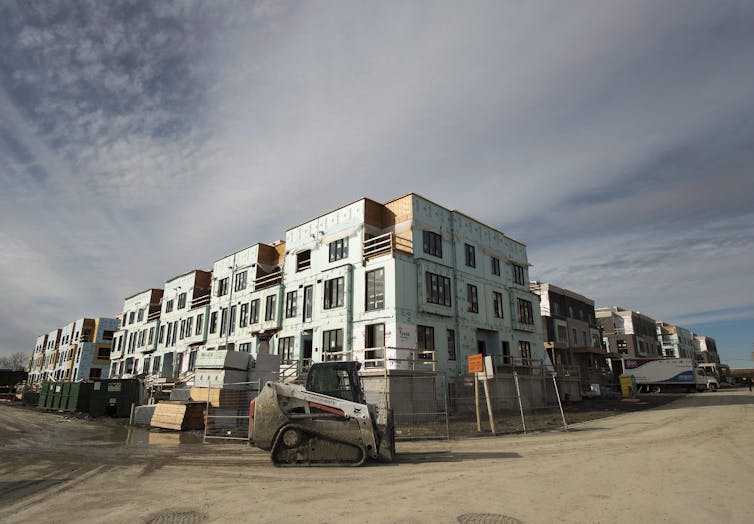
Ontario’s construction industry is already . Toronto is reported as having the of active construction cranes in North America and numbers of condominium completions.
With respect to the supply of land — which was a key justification for the government’s decision to remove lands from the Greenbelt — that there is plenty of land available in existing urban areas. This includes at least 250,000 new homes and apartments that were approved in 2019 or earlier but .
Research undertaken for the environmental organization Environmental Defence revealed that the Greater Toronto and Hamilton Areas have of already designated new (or greenfield or undeveloped) development lands within existing settlement area boundaries.
That is more than three time the amount of greenfield land (26,000 acres) used for development over the preceding two decades.
Building a sustainable and liveable province
All of this evidence suggests that there was neither a shortage of already authorized housing starts to accommodate Ontario’s growing population, nor a shortage of already designated land on which to build homes.
Simply put, the province’s sweeping housing strategy has been built on a foundation of sand.
The reality is that the region is already in the midst of a . The problem is that it has been a boom that has done little to , particularly for those at the lower end of the income scale who need it the most.
The housing “crisis” has had less to do with housing supply, and far more to do with the nature and location of what is being built.
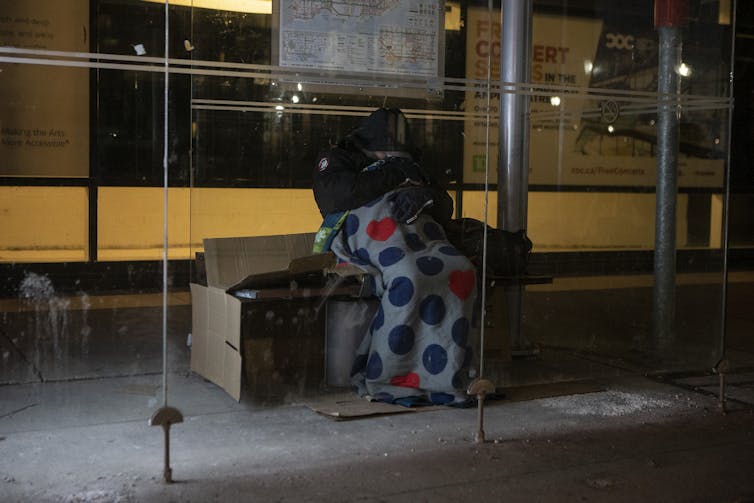
The in Bills 23 and 39, and the province’s accompanying moves to remove lands from the Greenbelt and allow development in the , seem likely to make these problems worse than ever.
The being made under the province’s housing legislation will accelerate urban sprawl and the accompanying losses of prime agricultural and natural heritage lands.
They would undermine efforts to build and protect real affordable housing and liveable communities, respond to a and ensure democratic governance at the local level.
The questions of housing and development in the Greater Toronto Area are far more than a need to simply build more and faster.
Increased federal immigration targets put on the housing market. But if anything, that reinforces the need for a vision for a sustainable, liveable and affordable region and not one focused on maximizing the development industry’s returns on investment.
The debates prompted by the Ford government’s housing strategy may mark the beginning of a conversation about what that future might look like. They cannot be its end.
Joe Castrilli, Counsel with the Canadian Environmental Law Association, contributed to this article.