
by Mark Winfield

Major wars are often watershed moments in history. Their outcomes define governance structures, politics and policy directions for decades, even centuries, to come. Russia’s already seems certain to have these kinds of effects at the national, regional and global scales.
The invasion has quickly come to dominate political and policy agendas, displacing the focus from the COVID-19 pandemic and climate change. But the war in Ukraine will have major implications for these questions, particularly around energy and climate change, for Canada and the rest of the world, far into the future.
Beyond the immediate horror of Russia’s assault on Ukraine, perhaps its most obvious effects in climate and energy policy terms have been to provide Europe with a powerful imperative to accelerate the process of decarbonizing its economies.
The risks associated with European dependence on Russian oil and gas have . A ban on Russian oil and gas imports, , may be one of the few measures left, short of direct military action, that could cause Putin to pause his attack.
While Canada faces no immediate threat to its energy security, it will likely face pressure to expand its role as a geopolitically stable and secure source of fossil fuels, reinforced by the economic opportunities offered by rising oil and natural gas prices. These developments could present significant challenges for °ä²¹²Ô²¹»å²¹â€™s current efforts to and reaching net-zero emissions by 2050.
Not sure on nuclear
Europe stands to see further increases in energy prices and potential shortages if it cuts off Russian oil and gas. But there is already in renewables, energy storage and other technologies that reduce Europe’s dependence on fossil fuels for space heating, transportation, industry and electricity generation.
There might also be renewed interest in , but that path is far from certain. The even with massive governmental support.
In addition, , its attack on the and President Vladimir Putin’s thinly veiled have provided stark reminders of the associated with a nuclear-heavy pathway to decarbonization and energy security.
Pressure at home and abroad
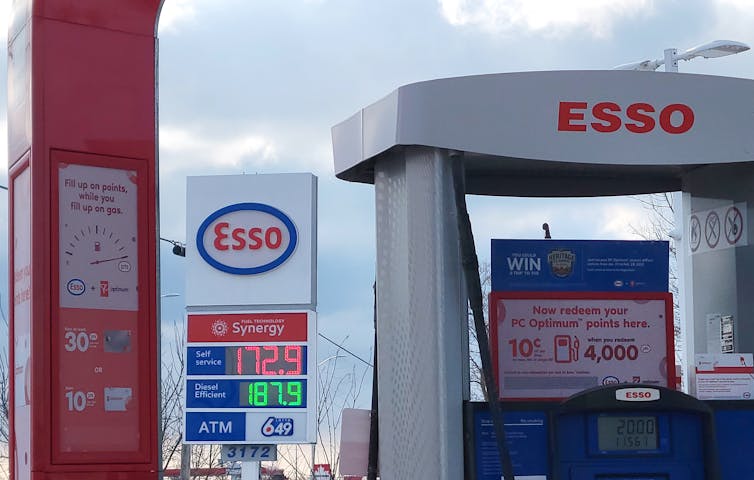
For Canada, the implications of these developments are quite different. and other fuels have surged in response to . , contributing about 13 per cent of world oil production in 2020.
Governments need to be vigilant around the possibilities of the old problem for war profiteering. The fuel now being sold at elevated prices was made from supplies bought and paid for long before Putin’s invasion. Russian oil is an element of °ä²¹²Ô²¹»å²¹â€™s energy supply, and both Canada and the United States have terminated their imports from Russia.
More likely, to expand its role as a secure source of fossil fuels for Western Europe and other consumers of Russian oil and gas. But moves to increase the country’s output of oil and natural gas will pose direct challenges to °ä²¹²Ô²¹»å²¹â€™s existing climate change commitments and policies.
°ä²¹²Ô²¹»å²¹â€™s current are overwhelmingly concentrated in the western Canadian oilsands. Their extraction is highly , and the federal government’s current climate policy trajectory is to move the upstream oil and gas sector towards by 2050.
New export infrastructure
At the same time, there is currently no direct route for a major expansion of exports of Canadian oil to Europe. Additional exports would have to move through the U.S. Gulf Coast, but that option is now constrained by, among other things, of the Keystone XL pipeline.
The situation may lead to calls for new export infrastructure. for the revival of the Alberta to New Brunswick — a pathway that could lead to renewed conflict between Québec and Alberta.
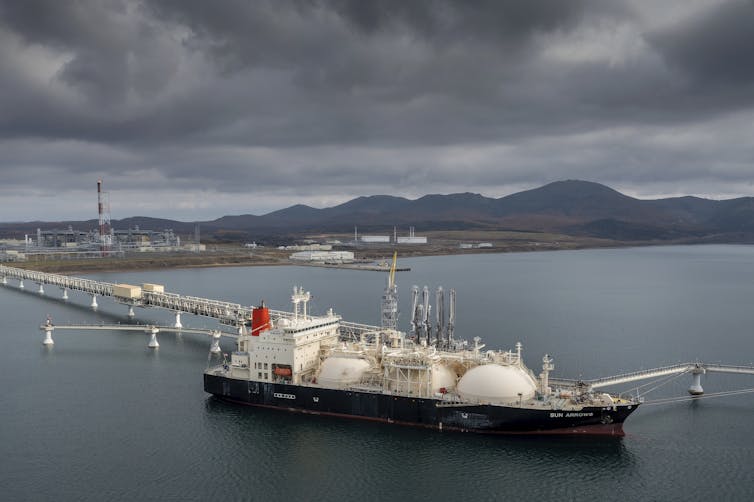
°ä²¹²Ô²¹»å²¹â€™s , but the geopolitical situation and rising world prices may renew interest in liquid natural gas export initiatives. Such developments would further complicate the national climate policy landscape, as accessing B.C.‘s gas resources would be highly . Proposals may also re-emerge for LNG export facilities in °ä²¹²Ô²¹»å²¹â€™s .
None of this could happen quickly enough to affect the immediate global energy security situation, and the economic viability of such projects would remain uncertain against the ongoing backdrop of widespread decarbonization in response to climate change.
The , making the achievement of the federal government’s 2030 and 2050 goals increasingly difficult. The pressures to expand fossil fuel exports will deepen these challenges, even as the Intergovernmental Panel on Climate Change has again .
One potential positive aspect at this stage may be that the prospect of oil and gas prices remaining elevated for the long term will accelerate public interest in °ä²¹²Ô²¹»å²¹â€™s own energy transition, particularly around .
The new relationships between energy, geopolitical security and climate change policy flowing from the invasion of Ukraine are only beginning to emerge. Their ultimate directions — along with the outcome of the war — remain uncertain, but the implications for Canada, particularly in terms of reconciling the goals of security, energy and climate change policy, may be enormous.
is a Political Scientist and Professor of Environmental and Urban Change at 91ÑÇÉ«. He is also Co-Chair of the Faculty's Sustainable Energy Initiative, and Coordinator of the Joint Master of Environmental Studies/Juris Doctor program offered in conjunction with Osgoode Hall Law School. He has published articles, book chapters and reports on a wide range of environmental, economic, energy and climate change law and policy topics. This article is reprinted from and has also been published in The National Post and The Toronto Star. He was also interviewed on the topic by .