
Titanic submersible 'catastrophic implosion': questions remain about the costs and ethics of rescuing tourist expeditions
Ali Asgary, Professor, Disaster & Emergency Management, Faculty of Liberal Arts & Professional Studies & Director, CIFAL 91亚色, 91亚色, CanadaWed, June 21, 2023 at 6:51 p.m. EDT路4 min read
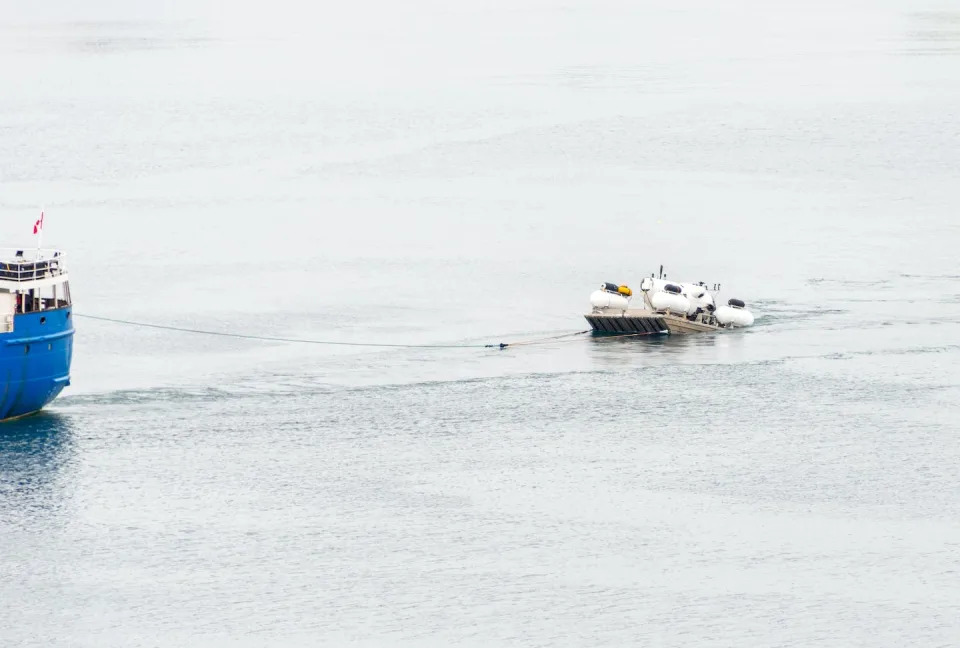
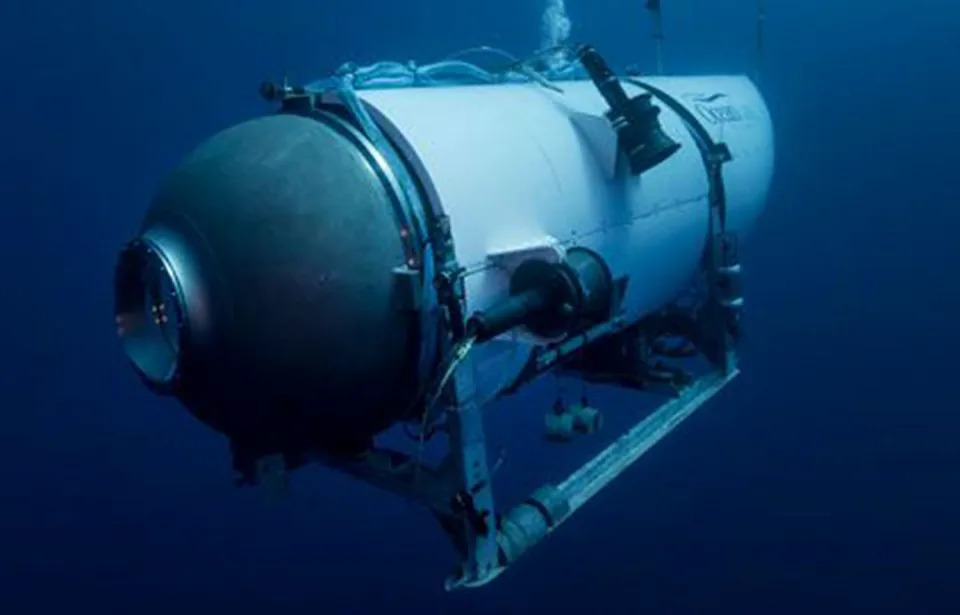
The U.S. Coast Guard announced Thursday was identified as belonging to the Titan, . Teams from different countries 鈥� including the United States, Canada, the United Kingdom and Germany 鈥� were conducting search missions under a very tight timeline.
The discovery, close to the site of the Titanic, indicates the end of search-and-rescue operations for the five people onboard, who were killed in a 鈥�,鈥� according to the Coast Guard.
As one of the largest international marine search-and-rescue operations, the incident raised questions about risk management, search-and-rescue operations, costs and ethical aspects of responses.
Ocean incidents
A significant number of economic activities 鈥� including shipping, fishing and offshore oil and gas drilling 鈥� are conducted in marine environments. These activities can lead to occurrences of accidents and casualties of different types.
Annually, a large number of incidents happen in the Canadian marine environment. Between 2011 and 2020, that had an annual average of 15.6 fatalities during the same period.
These numbers suggest that relative to the huge number of marine activities and the number of incidents, conventional marine-based operations are relatively safe and the emergency responses to them are effective.
An unusual situation
The search-and-rescue operations have been proven to be unusual, as measured by the complexity, costs, time sensitivity and scale. Unlike search-and-rescue operations on the ground that can be undertaken by volunteers and with little or no equipment, marine search and rescue is a .
It requires high-tech equipment, tools, training, co-ordination and capacity. In the current case, 鈥� rather, it was in cubic measurements (3D), because the vessel could have been anywhere around the surface, in shallow or deep waters, .
While there are capable teams with the needed equipment and training for most marine disasters, they are not sufficient to cover a large area with limited information or uncertainty about the situation.
Operational outcomes
This search operation was among the costliest in recent history. We need to wait to see how much of this cost will be covered by insurance, OceanGate or the public.
This event will generate significant discussions around the public burden of private risks and risk-taking behaviours, and how risks in certain areas are regulated. And it could count for about one-third of Canada鈥檚 annual average marine fatalities if it鈥檚 considered a Canadian incident.
Particularly, it will bring to the forefront questions about , including search-and-rescue.
Risk assessments
When embarking on risky operations, such as deep-sea touristic exploration, two elements need to be added to risk assessments: 1) Do we have adequate and timely internal and external capacity to handle a potential incident?; and 2) What are the total response costs of an incident?
While certain risky activities or operations may be acceptable based on a private assessment of risk, they may not be acceptable if we ponder these two aspects.
Unfortunately, many conventional risk assessments, particularly in the private sector organizations, do not pay sufficient attention to available emergency response capacities.
When considering , it became clear this small emergency surpassed the capacity of the resources that were operating in the area.
Teams from other places and countries joined the effort, but it took several days for a unified command centre for search-and-rescue to take shape.
Conducting a survey of available emergency response capacities to risk assessments can make a significant difference in risk management and regulation.
Similarly, many current risk assessments do not fully include emergency response costs in their calculations. While it is not a major consideration for many regular daily activities and operations because the emergency response is within regular possibilities, certain operations 鈥� particularly on remote marine environments 鈥� ought to add these costs into their risk assessment.
In doing so, risks may become more or less acceptable in terms of mitigation policies and regulations. Incorporating these aspects into risk assessments and regulations could help ensure that private operators provide additional safety and risk mitigation measures and assume responsibility for incurred costs.
This article is republished from , an independent nonprofit news site dedicated to sharing ideas from academic experts. Like this article? .
It was written by: , .
Read more:
Ali Asgary does not work for, consult, own shares in or receive funding from any company or organisation that would benefit from this article, and has disclosed no relevant affiliations beyond their academic appointment.