

91ÑÇɫ’s new Microlecture Series in Sustainable Living empowers individuals to take action in righting the future for a more sustainable world. Aligned with the University Academic Plan Building a Better Future, 91ÑÇÉ« upholds sustainability – environmental, social, and fiscal – as a vital compass for decisions and initiatives.Â
Launching during SDG Week Canada, this first-of-its-kind series offers faculty, staff, students and members of the public the opportunity to learn about sustainability from six of 91ÑÇɫ’s world-renowned experts. Recognized as a sustainability leader in post-secondary education, 91ÑÇÉ« designed the innovative series as a free, open access program featuring “microlecturesâ€� that focus on a diverse range of topics related to sustainability.
Those who complete the series, correctly answer test questions and commit to put their learnings into practice will earn a digital badge and become an “ambassador in sustainable living.� As an ambassador, individuals can inspire others to do the same, amplifying the impact.
It’s a small commitment that aims to drive big change.
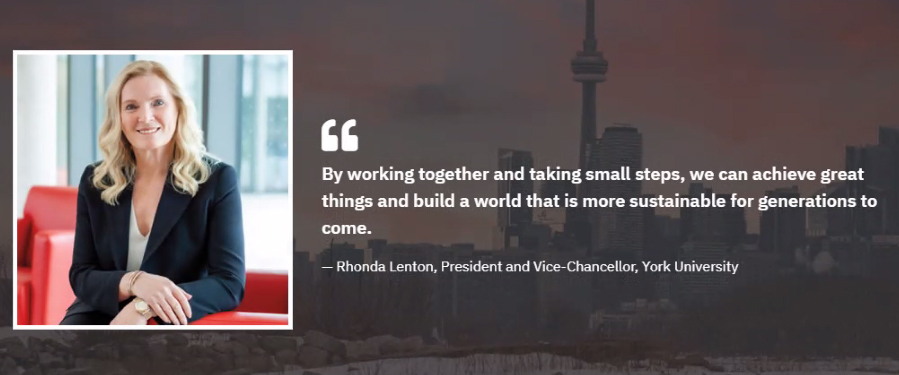
“Creating an equitable and resilient future requires all of us to become involved and make our planet’s sustainability an immediate priority,â€� says 91ÑÇÉ« President and Vice-Chancellor Rhonda Lenton. “Participating in the Microlecture Series in Sustainable Living and earning the sustainable living ambassador badge demonstrates a commitment to building a cleaner, more prosperous and just future, and will inspire others to make small changes that can have a big impact."
Participants can:
- learn how microplastics journey through and impact our ecosystems (Shooka Karimpour, assistant professor, Lassonde School of Engineering);
- unravel the relationship between energy and economic growth (Lina Brand-Correa, assistant professor, Faculty of Environmental and Urban Change);
- explore why the most vulnerable amongst us often face the highest flooding risks (Usman Khan, associate professor, Lassonde School of Engineering);
- discover the difference between a hazard and a disaster in context of emergency management (Eric Kennedy, associate professor, Faculty of Liberal Arts & Professional Studies);
- consider how colonialism has impacted the way disasters impact Indigenous communities (Yvonne Su, assistant professor, Faculty of Liberal Arts & Professional Studies); and
- dive into the reasons our lakes are rapidly warming (Sapna Sharma, associate professor, Faculty of Science).
The Microlecture Series is a way that anyone, anywhere in the world can learn from 91ÑÇɫ’s academic leadership and research expertise.
Each one of us has an important role in creating a more sustainable world. 91ÑÇÉ« community members are encouraged to watch the and become an ambassador in sustainable living. Join 91ÑÇÉ« in creating positive change.