

and , associate professors in the Electrical Engineering & Computer Science Department at the Lassonde School of Engineering, are developing a tool that can interpret the activity of cells involved in visual processes, enhancing our understanding of this complex biological system.
Whether we are admiring a beautiful landscape or watching an action-packed movie, our visual system is hard at work performing intricate biological functions that allow us to process and respond to visual information.

Understanding the intricacies of the visual system is key to advancing research in biology, biomedicine and computer vision. Moreover, this understanding can aid in developing strategies to address visual impairments in humans.
Eckford and Cheung's research is focused on nerve tissue behind the eye known as the retina. The retina is responsible for receiving images and sending them to the brain for processing using ganglion cells.
Many researchers have hypothesized that each ganglion cell type is responsible for computing specific features in a visual scene. For example, some cells may focus on information about the texture of an object, while others may process movement in a particular direction.
鈥淔rom a big-picture perspective, we are trying to gain a better understanding of the visual system and how the eye processes information,鈥� says Eckford. 鈥淲e developed a tool that can analyze a data set of ganglion cell activity and identify relationships and patterns to predict exactly what they are looking at.鈥�
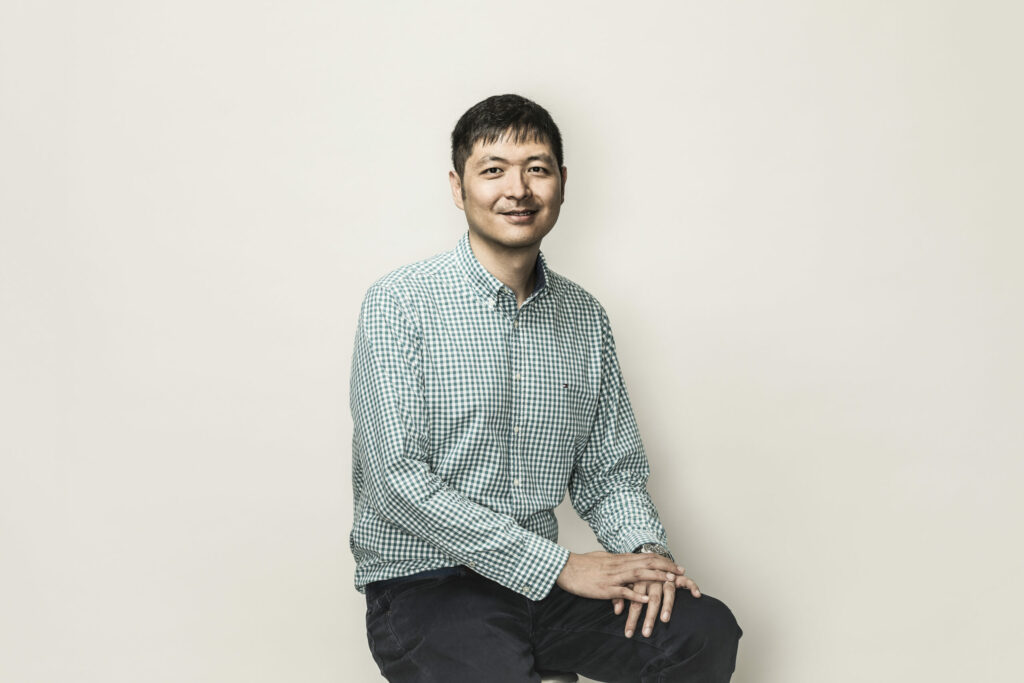
Eckford and Cheung, and their graduate student Yasaman Parhizkar, proposed a graph-based tool that uses mathematical operations to discover patterns within a data set and make useful predictions about trends among the data points.
The proposed tool was tested using visual data gathered from a novel experiment led by University of Chicago Professor Stephanie Palmer. During the experiment, a film about an aquatic environment was projected onto the retinas of salamanders. The scenes resembled their natural habitat 鈥� imagine cool waters, sea plants and the occasional swimming fish.
As the film played, data concerning the salamanders鈥� ganglion cell activity was collected. The graph-based tool was used to identify and interpret trends within the data set and link these patterns to specific visual features in the film.
鈥淚t鈥檚 really cool to be able to take a data set of cell activity and see if we can predict exactly what the eye is looking at,鈥� says Eckford.
Not only did the tool exhibit the capacity to interpret patterns within the data set and make useful predictions, but it also surpassed the abilities of comparable algorithms.
鈥淥ur tool addressed many of the problems that other algorithms have,鈥� says Parhizkar. 鈥淥urs is much more interpretable and less data hungry.鈥�
The applications of this unique tool can also be extended far beyond the field of biology, to industries such as agriculture, for making predictions about crop yield.
about this work in Eckford, Cheung (who is also a member of Conencted Minds) and Parhizkar鈥檚 recent publication.